




When a hospitality kitchen stops producing, the business stops taking covers. A refurbishment that overruns, a fire, a flood or a single failed appliance turns quickly into cancelled bookings, a closed dining room and customers who book somewhere else next time.
PKL supplies temporary kitchens, cold rooms, refrigeration and catering equipment that keep pubs, restaurants, hotels and visitor attractions trading through exactly those situations, and permanent modular facilities for operators who are expanding rather than recovering.
How We Support Hospitality Operators
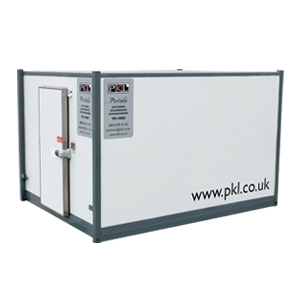
Hospitality operators come to PKL for four things: continuity while a kitchen is refurbished or replaced, so the venue keeps serving through the works; emergency cover after a fire, flood or equipment breakdown, where the priority is speed; event support, where a venue is catering beyond its normal pattern; and extra capacity, either for a busy period or for a site whose kitchen provision is limited for what it has to serve.
All four are handled the same way: PKL surveys the site, designs a facility around the menu and the covers, delivers, installs and connects it, and removes it when it is no longer needed.


How We Support Hospitality Operators
Keeping The Kitchen Open Through a Refurbishment
A kitchen refurbishment or fit-out is the one project a hospitality business cannot simply pause around. The works take the production space out of use, but the bookings, the function diary and the trade do not stop for them.
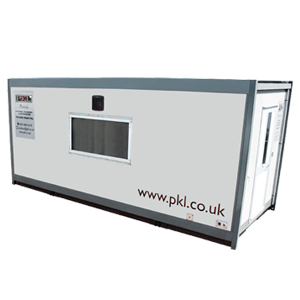
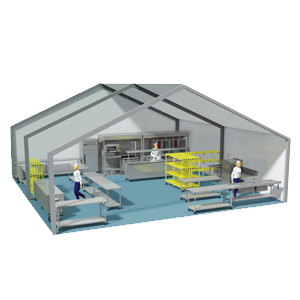
PKL provides a fully equipped commercial kitchen alongside the works, so the venue continues producing and serving throughout. Our team surveys the site and designs the facility around the menu, the covers and the service pattern rather than around a standard package, then positions it wherever the site allows: typically a car park, a service yard, a beer garden or an area of hard-standing.
Because the facility is specified to your menu, the kitchen team continues to cook the same dishes to the same standard, which is what protects the reservation book while the permanent kitchen is out of use. Units can be expanded, reconfigured or relocated as the works move through their phases, and once the new kitchen is commissioned PKL removes the installation and reinstates the area.
Emergency Cover After a Fire, Flood or Breakdown
An emergency is a different job, and the only measure that matters is how fast a working kitchen is on site.
PKL runs a 24-hour line, 365 days a year, and can often deliver the same day, depending on what is required. Every unit is cleaned, tested and re-commissioned after each hire at our own preparation facility, which is what makes rapid dispatch possible: an emergency kitchen leaves ready to work rather than waiting to be made ready. Delivery and installation are carried out by PKL’s own transport and installation teams, so response time does not depend on a third-party haulier.
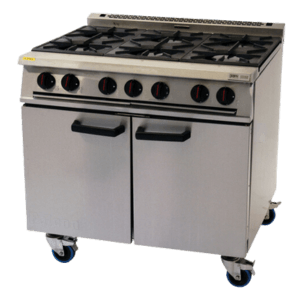
Where the loss is limited to refrigeration or to one part of the operation, there is no need to take a whole kitchen. Standalone catering equipment, refrigeration and cold rooms are hired individually to cover a specific failure, for as long as the repair or replacement takes.
Extra Capacity, Events and Sites With Limited Kitchen Space
Not every requirement follows a problem. Hotels catering a wedding season, venues running an event programme and attractions absorbing a summer peak all need more production and cold storage for a defined period, and hiring it is more sensible than building it permanently.
The same applies to a kitchen that is simply too small for what it now serves. Additional preparation space, cold storage or a central production unit sits alongside the existing kitchen, seasonally or longer term, without committing to an extension. PKL supplied scalable refrigeration and catering equipment for Cirque Lumiere at the Bloomsbury Big Top under exactly that pressure.
Permanent Cafes and Restaurant Facilities
Where the requirement is permanent rather than temporary, PKL builds it. Modular cafe and restaurant facilities and KitchenPods are supplied either as a purchase or on an all-inclusive contract hire covering service, maintenance and support.
These are built off site and installed with minimal disruption to the operation around them, creating high-quality, permanent catering facilities that can be operational within weeks rather than months.
What a Hospitality Installation Has To Get Right
Speed matters most. Every day a hospitality kitchen is not producing is revenue lost and customers disappointed, so PKL works to the shortest practical programme and designs around what is achievable on the site rather than around an ideal layout.
Siting is the next decision. Level hard-standing is preferred, though integrated levelling systems allow siting on less even ground, and units are placed by crane where vehicle access is restricted. Most installations connect to power, water and waste, with gas as an option and electric alternatives available; where a connection is not available, PKL can arrange generators, water and waste provision.

Site
Survey

Kitchen
Design

Equipment Preparation
and Testing
 Delivery and
Installation
 Dedicated
Service Team
Compliance and Standards
The questions a hospitality operator asks come down to gas, refrigerant and food safety. PKL is Gas Safe and F-Gas registered, and every kitchen is built to commercial catering standards and suitable for HACCP-based food safety management, so a temporary facility does not compromise the systems the venue already runs to. Alongside those, PKL holds ISO 9001, ISO 14001 and ISO 45001, together with CHAS, SAFEcontractor, Constructionline and CSCS. Every unit is prepared, tested and inspected before dispatch, and certification is handed over with the installation.


FAQs
- 1
How fast can you get here?
PKL runs a 24-hour line, 365 days a year, and for an emergency can often deliver the same day, depending on what is required. For planned work such as a refurbishment, we agree the date at survey and install to your programme.
- 2
Can we keep serving the same menu?
Yes, in almost all cases. The temporary kitchen is specified around your existing menu, your covers and your service pattern, including the cooking, refrigeration and cold storage the menu depends on, so the kitchen team continues to produce the same dishes.
- 3
Where does the kitchen go?
Wherever the site allows, most often a car park, service yard, beer garden or area of hard-standing. Level ground is preferred but integrated levelling systems allow siting on less even surfaces, and units can be placed by crane where vehicle access is limited.
- 4
Do we need planning permission?
It depends on the site, the duration and your local authority, so it is worth checking with them early. We will confirm at survey what documentation we can provide, and the application itself is made by the operator.
- 5
What about extraction and gas?
Kitchens are built to commercial catering standards and the ventilation and services arrangements for your site are confirmed at survey. Gas is available where the site supports it and PKL is Gas Safe registered; where it is not, an electric specification is used instead.
- 6
How long can we keep it?
As long as you need it. There is no minimum hire period, and hires run from a few days covering a breakdown to the length of a full refurbishment programme.
- 7
Can we buy rather than hire?
Yes. PKL supplies permanent cafes, restaurants and KitchenPods, available either as a purchase or on an all-inclusive contract hire that covers service, maintenance and support.


 Address:
 Phone:
 Email:


