


What I Learnt from Catering Large Events and how it Changed the way I Worked
I’ve spent many years honing my skills as a chef, working for Gordon Ramsey, Clare Smyth and even spending two years in the gastronomic capital of the world, Paris. I have worked in teams that achieved three Michelin stars, five AA rosettes and 10 out of 10 from the Good Food Guide.
But I had to reconsider everything I had learnt when I started to cater for large, outdoor events.
Below I outline what I took from my recent forays into events, not least the PX+ festival, a special event created by the hospitality industry for the hospitality industry, which I helped launch with my wife and other friends and colleagues in August 2018.
Realising the Size of the Challenge
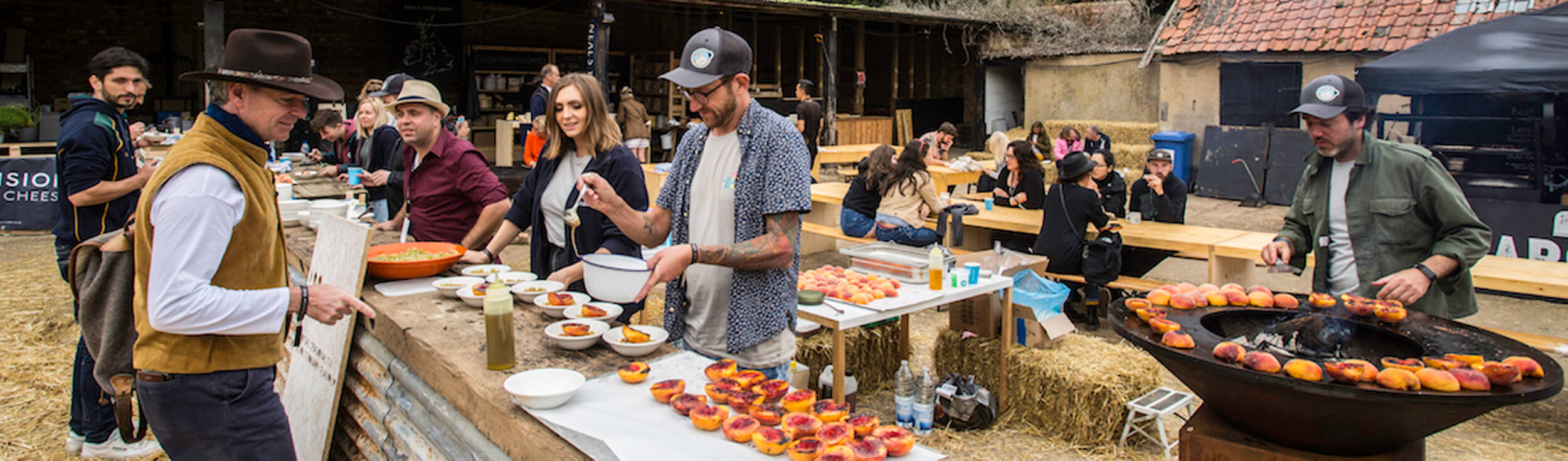
As we began our preparations for our first big event, serving more than 1,000 people, we started with what we wanted to achieve and worked back from there. This provided a framework and a context to create our draft plans: we had started to define the challenges we would face and what our timescales were.
We wanted to create a food experience for our guests which was as good as if they were sitting down in our own 54-cover restaurant in Notting Hill. We wanted them to experience inspiring food that reflected the time of year, the current food trends in the UK and that utilised food sourced locally.
Depending on the event we were preparing for, this presented different challenges.
For example, on the PX+ festival, we weren’t in Notting Hill, we were on a farm in the Hertfordshire countryside. We would be serving more than 1,000 people. How could we achieve what we wanted?
We began to look for guidance that would help us create something special.
Lean on your Network
We reached out to our network of contacts. We made sure we talked to the right people.
We sat down with people from our network, like the legendary Anton Mosimann, who is used to catering for 4,000 people regularly. He gave us the plan he’d use for a large event, and then we took that footprint and we moved it to our situation and used it to begin our planning.
We changed what we needed to change, but having that starting point based in someone’s real world experience was invaluable.
It’s a great thing about the community we have within the hospitality industry in the UK at the moment, that there are people who run these sorts of events every day that are ready to share it with those who need it. It’s a vital part of events and catering, in my view, to be connecting to other professionals and sharing experiences to help improve our own practice and help the industry as a whole get better and better.
That is the biggest piece of advice I would give to anyone setting out on the challenge of catering for large amounts of people: If you have never catered for big numbers before, or have never catered for an outside event, then someone you know will have done.
Meet them and ask them: “how did you cater for this many people?” “what did you do differently?”
Find out what they know and what they’d advise. There is no substitute for experience.
More is Definitely More
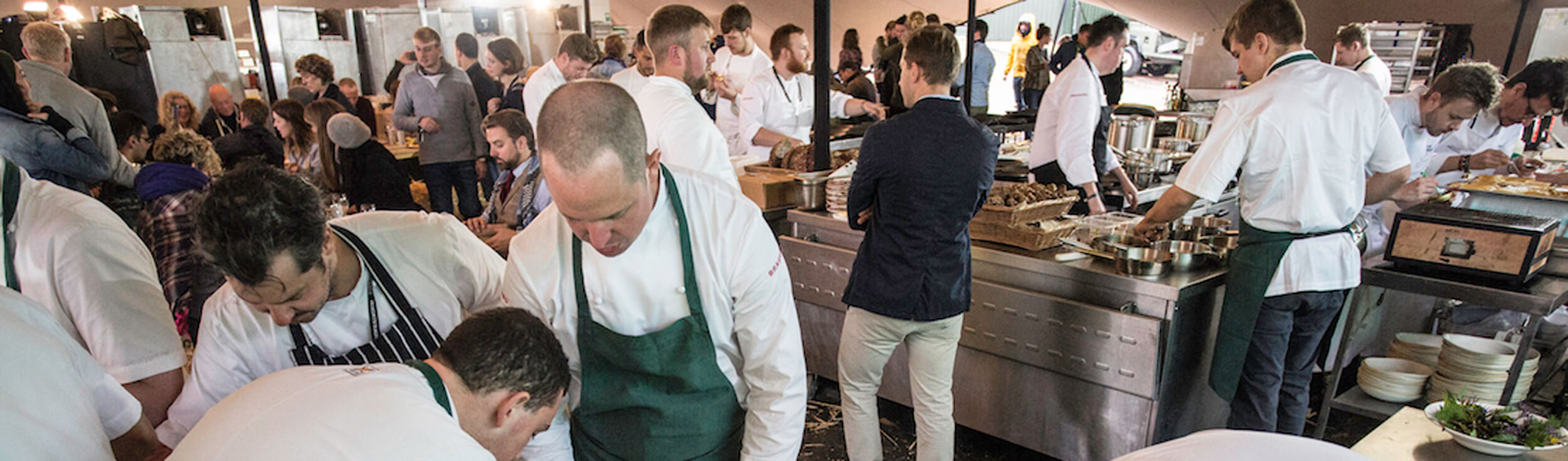
Engaging with our supplier network and looking at our workflows, we discovered that catering at this scale requires you to go for that little bit extra on every front.
More equipment
Kitchen infrastructure is a big concern of any caterer, but for an outside event it is absolutely vital.
When you are dealing with large scale events, you can’t simply take what you would normally use and scale it up using a standard ratio. The demands on your kitchen change as the number of guests you serve changes, and this means you have to think differently about all your kitchen infrastructure, to start with.
Upgrade your expectations for how much refrigeration and production equipment you will need. By over speccing in this way, we discovered you gain flexibility and contingency, which are two priceless commodities when the heat is on.
One of the biggest things we learnt was temperature is a very big problem in outside kitchens.The environment is not very controlled. This is particularly important during outdoor summer events. The temperature can fluctuate wildly, and this makes protecting your food from these extremes a priority, so extra refrigeration can protect your planning and your food from the vagaries of the British weather!
More prep space
A similar lesson we learnt was to create as much prep space as possible, this again gives you contingency and flexibility and can also help to reduce kitchen stress, as there is less overlap between sections. We brought in extra prep tables and had them near to our banks of refrigeration and dry storage, maximising the efficiency of those sections.
More people
You need to upscale your people: have more hands available, especially at crunch times during prep and plating. When you deliver to a high level at large scale, you need to change your staffing and your systems to become more efficient.
Your team will be plating up, tens, if not hundreds of meals at one time. I found it really helped to have staff who have experience of producing this many meals in your team, because they appreciate the importance of the prepping systems you have to put in place so the kitchen is efficient and doesn’t compromise on quality. Get it right and 10 extra staff can do the work you’d previously expect sixty to accomplish. Simpler dishes – more taste.
The main challenge we faced was the complexity of the dishes we were used to preparing, some of which had 20 ingredients and up to 10 different elements to plating up. These types of dishes require one chef to be engaged per plate. If you are serving 1,000 or more people, that kind of model just doesn’t scale, you’d need 1,000 chefs!
But this kind of constraint didn’t put us off, however. It helped give us focus and concentrate on the flavours we wanted the visitors to experience, and this helped lead us to create a menu of dishes with fewer ingredients, but no loss in flavour. Without fail, the dishes that worked best at our last few events were the simplest ones, some with as few as three, flavour-filled ingredients.
Conclusion
If you are going to cater for a large event for the first time, here’s the things I learnt from my first few forays into large scale events catering:
1) Talk to the right people: find experts in all elements of large scale catering and talk to them early on in your planning process, as it will save you a lot of heartache
2) You need to increase the amount of kit you use, over and above a simple multiplication of what you would normally use, this is ESPECIALLY true of refrigeration
3) Change your prep systems to create simple, efficient processes that allow you to produce a lot, very quickly
4) Simplify your dishes: reduce the number of ingredients and plating elements you use to the essential tastes you want your guests to enjoy
By Jonny Bone, Head Chef at Core by Clare Smyth and Director at PX+ Festival




 Address:
 Phone:
 Email:


