


Event Organisers: Understanding Supplier Safety & Legal Consequences
Could I go to Prison if my Supplier isn’t Safe?
Lee is an operational process advisor and has supported many event industry organisations over the past 15 years including the Farnborough Air Show, the Goodwood Estate, Wembley Park, the exhibition industry trade associations and many supply chain and contracting businesses such as Rapiergroup, Aztec Event Services and Showlite. He is an advocate for “integrated risk management” supporting clients with joined up processes for health and safety, environment, quality and data security that meet legal, business and client requirements.
Health and Safety advisors can be painted as doomsayers or even, and I know this will be difficult for some readers to believe, scaremongers. And of course, as a purveyor of health, safety and other operational risk related support services to event industry organisations I’m not “unaware” that fear is one of several common motivators for buying my type of support.
But please do read on regardless. This is a serious article and if you organise events professionally some of what’s in it might surprise you.
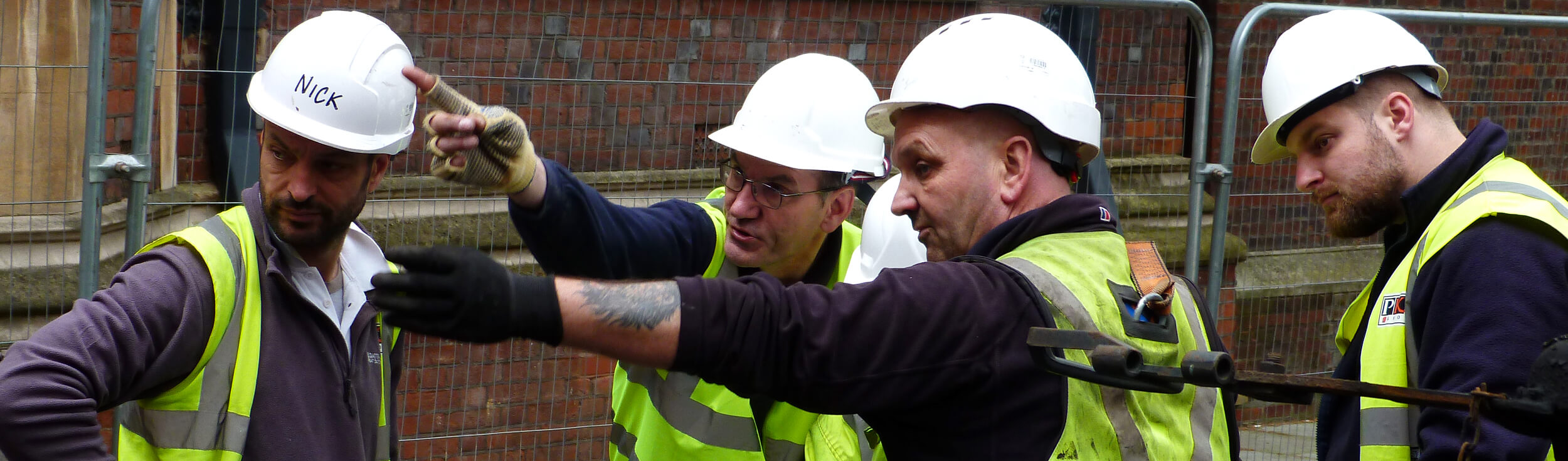
Health and Safety Applies to ALL Events
I’ve worked in and around the events industry for twenty years but, also – and importantly – outside of it, too. A broad church and a crazy Venn diagram, the event sector includes business events, exhibitions and conferences in one circle, public events, festivals, concerts in another, village and community fetes in another, then sports, team building, fund raising in others. There are dozens of niche trade associations that support each area and numerous resulting safety guides to supplement official documents from HSE, CIEH, Govuk, NaCTSO, BSI and other recognised resources.
But despite the myriad of legislation and case law from non-event sectors and the specific attention and official studies that have been published about the events industry (I’m thinking the 2011 “Identification of safety good practice in the construction and deconstruction of temporary structures from the Health and Safety Laboratory – google it – as well as the HSE’s entertainment specific web pages relating to the CDM Regulations) I do still hear the following on a regular basis:
“We’re different, we’re the events industry, we wouldn’t be expected to comply with health and safety legislation in the same way – we’ve too many logistical, cost-related, time constraint and sub-contractor challenges to meet usual standards…”
I think it’s absolutely critical that any individual, group or commercial entity organising an event of any type understands that the above position is wishful thinking at best and a dangerous self-deception at worst. I’ve been part of an enforcing authority’s investigation into an event sector incident (a life changing limb injury) and can tell you first hand that as soon as somebody gets hurt, you will be evaluated against the same national laws as every other sector – did you break the law, did you deviate from official guidance documents – what can you prove you did – your audit trail and legal justifications will be imperative and your “events sector” status absolutely will not help you to any extent at all.
Health and Safety at Work Act
I don’t think anyone wants to read a detailed breakdown of health and safety legislation at this point so instead I’ll paraphrase the 1974 Health and Safety at Work Act:
You should not expose your employees or anyone else who may be affected by your work activities, including anyone operating in a place of work (temporary or permanent) that you control, to health and safety risks – and that your products and / or services must be designed and constructed to be safe and without risks to health at all times when they are produced, used, cleaned or maintained.
This abridged version of just four of the act’s eighty five sections pretty much equips the legal system to prosecute any resulting work related injury or arising health condition and the supporting regulations enabled by the act provide, as you would expect, a lot more detail and “teeth” to prosecutors.

There is no Leeway in Health and Safety
I write a lot about the miss-quoting of “reasonably practicable” – a term that is used in the 1974 act to qualify how far you need to go so as not to expose somebody to risk. Often it’s thought that the phrase means the same as just “reasonable” and therefore it’s all a bit subjective and we probably have a certain amount of leeway.
But in fact “reasonably practicable” is a much more specific “legal test” defined in case law that translates to “if something can be done to improve health and safety then it should be done – unless the cost or operational complexity is grossly disproportionate to the benefit” – note grossly.
And this, very specific and, when you think about it, pretty tough, legal test will apply to the extent that you have planned your event activity, made roles and responsibilities for health and safety clear and specific, ensured the right level of health and safety competency is in place for different types of work and that appropriate information has been circulated and understood.
It will apply to the extent that you have been able to effectively segregate vehicles (plant as well as cars) from pedestrians, ensured traffic personnel are trained and are kept safe, vetted any amusements or rides at the event to good practice standards, planned and coordinated construction of temporary structures, temporary electrics and plumbing, fire, evacuation and emergency response arrangements… the list is a long one.
Supplier Management and Liability
So, to return to the article’s headline – what about supplier management and liability?
We know the health and safety at work act (HASAWA) means that you have to ensure the safety of all relevant parties during both production and usage of your event services and so, without any further regulation, you’ll appreciate already that there’s a clear legal requirement to vet suppliers and subcontractors and the part of your service that they undertake for you (in addition, usually, to insurer’s terms and conditions).
However since 2016, in part due to the findings of the HSL report in paragraph 4, the Construction Design and Management Regulations 2015 (CDM) have also been enforced not only in the context of traditional construction sites but in the context of temporary construction work in the world of events.
Construction Work
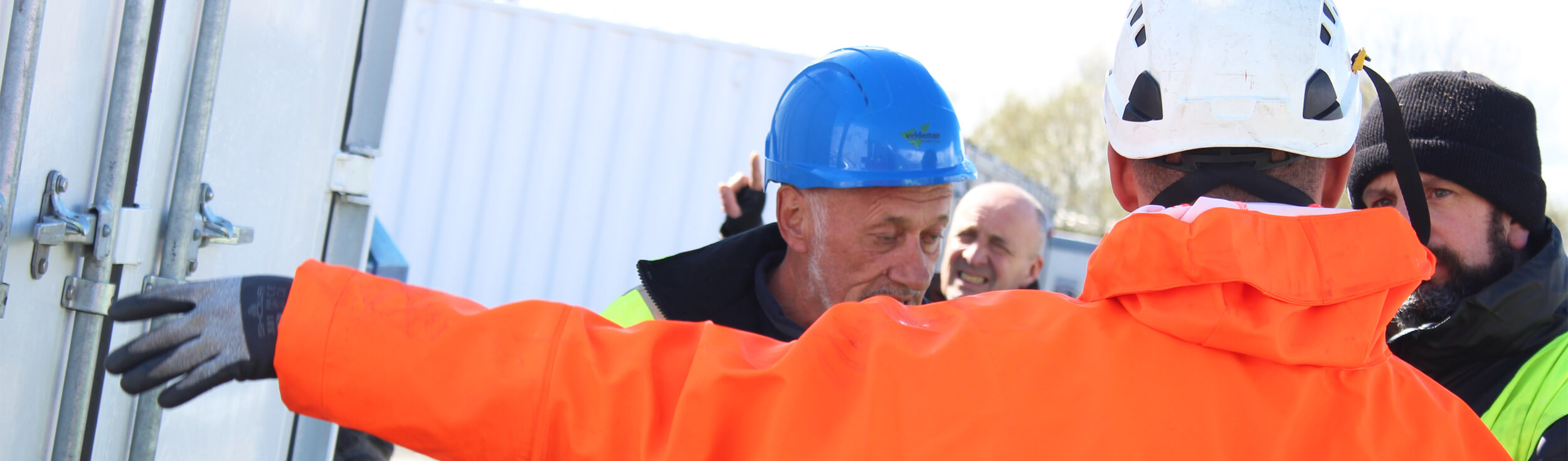
“Construction work” is defined in the CDM Regulations as anything including – the construction, alteration, conversion, fitting out, commissioning, renovation, repair, upkeep, redecoration or other maintenance, de-commissioning, demolition or dismantling of structures and the preparation for intended structures, including site clearance, exploration, investigation and excavation and the clearance or preparation of the site or structures for use or occupation at its conclusion and the assembly on site of prefabricated elements to form structures or the disassembly on site of the prefabricated elements which, immediately before such disassembly, formed structures and the removal of structures, or of any product or waste resulting from demolition or dismantling of structures, or from disassembly of prefabricated elements which immediately before such disassembly formed structures and the installation, commissioning, maintenance, repair or removal of mechanical, electrical, gas, compressed air, hydraulic, telecommunications, computer or similar services which are normally fixed within or to structures.
So, pretty much everything across an event build and break site including electrical and plumbing services as well as exhibition stands, stages and temporary buildings.
Roles of Event Organisers
Subject to outliers, most event organisers take on, by default, the formal, statutory roles under CDM of Client, Principal Designer and Principal Contractor in relation to the parts of the event that they procure and coordinate directly (ie, exhibitor commissioned exhibition stands as an example would be seen as separate CDM sites-within-a-site and would not fall within the specific liability of an organiser unless their site-wide arrangements had contributed to an accident).
Principal Designers
As Principal Designers of an event, in addition to general HASAWA requirements, an organiser has to:
- Plan, manage, monitor and coordinate health and safety before the on-site construction work begins, taking into account relevant information about the event site / venue
- Bring together “pre-construction information” – known hazards and relevant safety rules relating to the site / venue and provide this to its contractors
- Work with all participating contractors to eliminate foreseeable health and safety risks at planning stage
- Ensure that everyone involved in the pre-site planning communicates and cooperates, coordinating their work wherever required
Principal Contractors
As Principal Contractors of an event, an organiser must also:
- Plan, manage, monitor and coordinate the entire on-site build and break phases
- Prepare a written construction phase plan before build-up begins and regularly review it
- Ensure suitable welfare facilities are provided
- Take steps to prevent unauthorised access to the site
- Ensure all workers have site-specific inductions, and any information and training they need
- Check that anyone they appoint (both other contractors and direct workforce) has the skills, knowledge, experience and, where relevant, the organisational capability to carry out their work safely and without risk to health
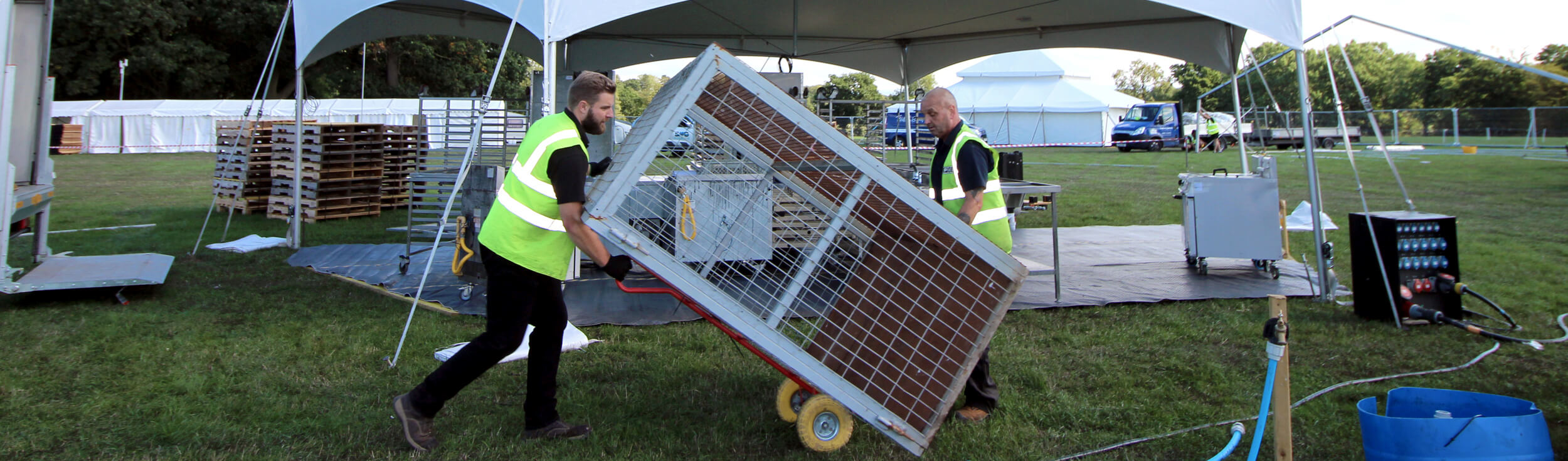
Headline takeaway is that CDM very much puts you in the frame for any mistakes that your suppliers / contractors make on an event site in relation to construction activity, in a much more specific way than the 1974 HASAWA. And case law has shown in recent years how surprisingly common it still is for life changing injuries and deaths to occur from pedestrian collisions with plant and falls from height and serious injuries and deaths are also a reality in relation to temporary structures collapsing.
Principal Contractors are regularly prosecuted for these types of accident that, without legal context, may read like the sole fault of a subcontractor at first – google prosecutions of Costain, BAM Nuttall, Balfour Beatty, Laing O’Rourke – all highly credible and professional Principal Designer / Principal Contractor businesses with extremely high standards of health and safety management, yet recipients of huge penalties in relation to their contractor’s accidents.
So how Could I go to Prison?
So there’s a clear indication of liability in relation to the selection and use of lower cost, potentially less conscientious suppliers, but how about actually going to prison for a sub contractor’s error?
Completing the perfect storm for the event organiser are the 2016 Health and Safety Sentencing Guidelines.
This new framework for deciding on the level of penalty – monetary or custodial – that a convicted organisation and / or individual director can receive is based on a number of tests including (1) culpability or blameworthiness (2) seriousness of the harm risked and the likelihood of the harm and (3) the financial means of the organisation / individual – its / their income.
Now, the 2008 Health and Safety Offences Act had already allowed magistrate’s courts to fine up to £20,000 for health and safety cases and had also for the first time made a prison sentence an option for almost any health and safety offence tried in either a magistrate’s or a crown court where a director or any employee had contributed to an offence by their consent, connivance or neglect.
The addition of the sentencing guidelines – that look not so much on the outcome of the accident, but the potential of the outcome – make the big picture scenario very real for an event organiser.
The Organiser has Legal Responsibilities
Yes, the organiser has legal responsibilities to ensure that suppliers and contractors are competent and work safely. Yes, there is case law to prove that Principal Contractors are prosecuted for their contractor’s accidents. Yes, there is also now an open-ended mechanism for imprisonment, based on two fairly recent changes to legislation and judicial powers where either a serious injury occurred – or may have occurred – as the result of neglect on the part of the organiser.

Conclusion
Lower cost suppliers are not of course necessarily deficient in their health and safety arrangements but a significantly cheaper then market vendor should definitely be scrutinised robustly to ensure that they have a reassuringly robust set of health and safety and other operational arrangements in place.
What might feel like an acceptable risk when looking at the budgets absolutely won’t if somebody gets hurt and you find yourself facing a judge and jury.
By Lee Holloway, Director at FPL and CORAC



 Address:
 Phone:
 Email:


